
How Onyx Is Quarried and Hand-Carved
Natural onyx is one of the earth's most demanding materials to work with. It is brittle, often layered with unpredictable grain patterns, and unforgiving when struck incorrectly. Yet for more than two millennia, artisans have sought it out for jewelry, sculpture, and fine decorative objects because of its luminous depth and striking banded patterns. At Scintilla, we source onyx from quarries in Pakistan and commission skilled carvers to hollow and sculpt each block by hand into a vessel worthy of our 100% soy candles. This is not mass production. This is geology meeting craft.
Where Onyx Comes From: The Quarry
Onyx begins its journey in bedrock layers formed over millions of years. Microcrystalline quartz deposits fill cavities and fissures in limestone and dolomite, building up in distinctive parallel bands of color, translucency, and depth. The quarries that supply our onyx are located in Balochistan, Pakistan, a region renowned for producing some of the world's finest chalcedony and onyx. The stone here carries rich yellows, deep crimsons, soft creams, and the darkest blacks, often layered together in ways that no two blocks are ever truly identical.
Quarrying onyx is labor-intensive. Workers use hand tools, pneumatic drills, and water-cooled saws to extract blocks from the bedrock without shattering them. A single viable block might take days to separate from the surrounding stone. Once extracted, the rough block is transported to the carving workshops, where its true potential is assessed. This is where the real artistry begins.
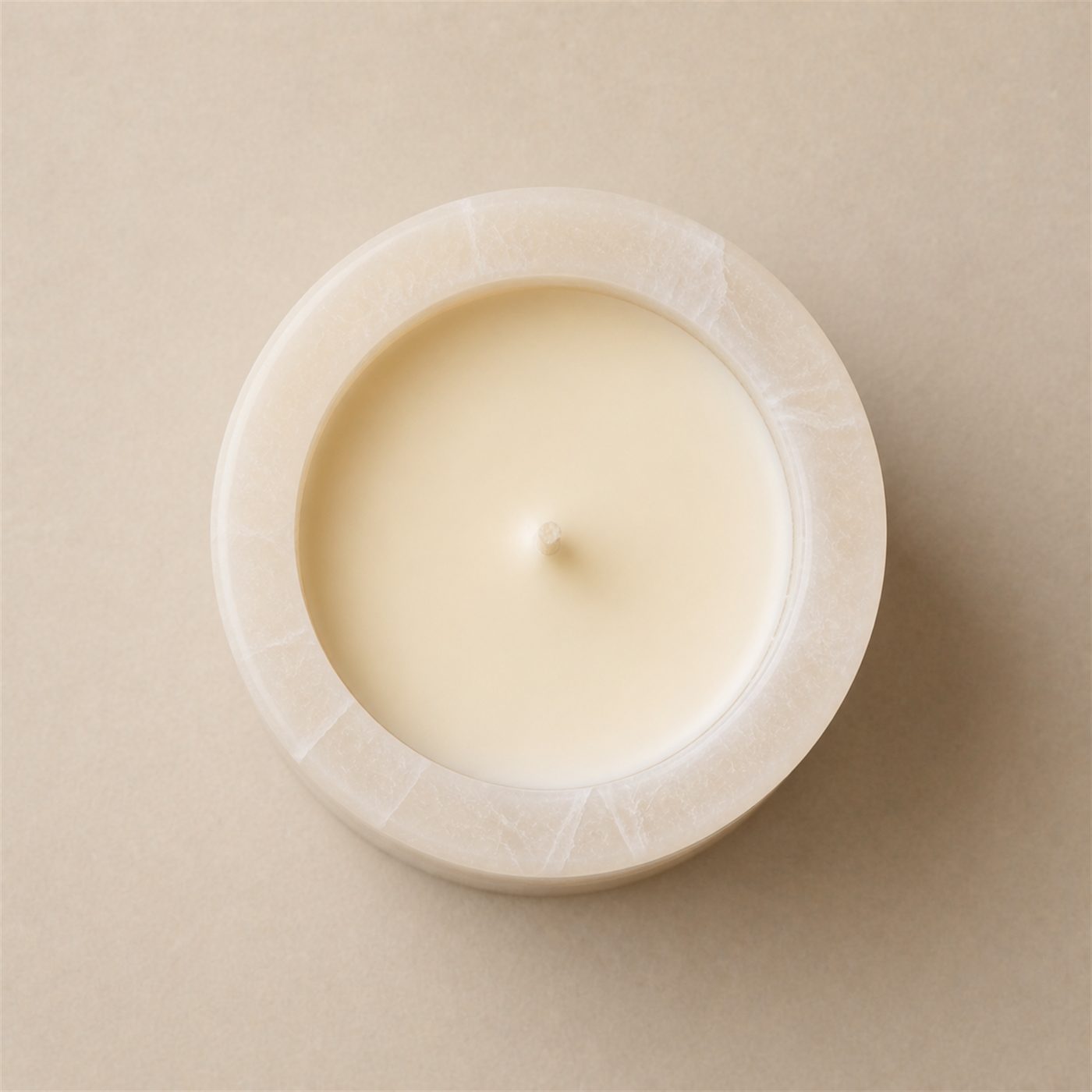
The Hand-Carving Process: Five Stages to a Finished Jar
What distinguishes a hand-carved onyx vessel from a mass-produced one is the human decision-making at every step. A carver must read the stone's grain, anticipate how it will behave under pressure, and adjust technique in real time. Below are the five core stages our carvers follow:
- Initial Assessment and Layout: The carver examines the raw block under natural light, identifying grain patterns, weak points, and the strongest path for cutting. A centerline is marked to guide the hollowing process.
- Rough Cutting: Using diamond-tipped saws and high-speed rotary tools, the carver cuts away excess stone and begins to define the outer shape. This stage removes the most material and requires the most precision to avoid catastrophic breakage.
- Hollowing and Interior Shaping: The carver drills and chisels into the top of the block to create the interior cavity. Hand tools allow for subtle adjustments; the carver can feel the stone's resistance and respond accordingly. This stage determines both the functionality of the jar and its visual balance.
- Hand-Finishing the Exterior: Once the interior cavity is complete, attention turns to the outer surface. The carver uses progressively finer abrasives, chisels, and carving tools to smooth the walls, refine edges, and highlight the natural banding of the stone.
- Sanding and Polish: Multiple passes with increasingly fine-grit sandpaper bring out the stone's natural luster. The bands become luminous, the color deepens, and the tactile quality of the finished piece emerges. A final light oil or wax may be applied to enhance the natural shine.
Each of these stages requires hours of focused work. A single jar may take 15 to 20 hours from raw block to finished vessel, depending on size and complexity.
Why Hand-Carving Creates Irreplaceable Pieces
A machine can cut stone with extreme precision. A hand carver does something different: they respond to the material itself. Onyx is not uniform. A band that looks solid in one spot may be slightly more fragile a few inches over. The carver feels these variations as they work and adjusts their technique accordingly. One carver might taper the walls slightly thinner to emphasize translucency in a pale section; another might leave the walls thicker where the stone shows a stress line. These decisions cannot be programmed.
This is why no two hand-carved onyx jars are identical, even when carved from blocks quarried from the same location. Each vessel carries the fingerprint of both the stone and the artisan who shaped it. When you light a Scintilla candle in a hand-carved onyx jar, you are looking at something that has never existed before and will never be created again in exactly the same way.
The People Behind the Process
The carvers and quarry workers who make our vessels possible are based in Balochistan, Pakistan, a region with generations of stone-working tradition. Many of our carvers learned the craft from their fathers or grandfathers, inheriting both technique and an intuitive understanding of stone behavior. They work in small family operations or modest workshops, not factory floors. They know each block they work with personally.
This human continuity matters. It ensures that traditional methods are preserved and refined rather than replaced by speed-optimized processes. It also means that every piece of Scintilla onyx carries the intention and skill of a specific, named artisan. We maintain relationships with these carvers because sustainable luxury depends on fair compensation, reasonable timelines, and mutual respect. When you invest in Scintilla, you are supporting these communities and their craft traditions directly.
From Carving to Your Home: Quality Control and Finishing
Once a jar is carved and polished, it undergoes quality inspection. We examine the walls for any hairline fractures that may have developed during carving, verify that the interior cavity is smooth and safe for a burning candle, and assess the overall finish. Any pieces that fall short are set aside. This inspection process discards approximately 5-8% of completed jars, a cost we accept because only the best vessels reach your home.
The finished jars are then carefully packed for their journey to our workshop, where they are paired with our 100% soy candles. Learn more about our commitment to sustainable materials and the candle-making process by visiting our About page. For a closer look at the full range of onyx colors and finishes we work with, explore our pink onyx collection and the other curated selections available.
Key Takeaways
- Onyx is a microcrystalline quartz formed over millions of years in layered deposits, quarried in Balochistan, Pakistan for its depth and unique banding patterns.
- Hand-carving onyx requires 15-20 hours per jar and involves five distinct stages: assessment, rough cutting, hollowing, exterior finishing, and polishing.
- Because skilled carvers adjust their technique to respond to each stone's individual grain and structure, every hand-carved onyx jar is genuinely one-of-a-kind.
- Scintilla partners directly with Pakistani artisans and stone workers, supporting traditional craft techniques and fair compensation rather than mass-production methods.
Frequently Asked Questions
How is onyx different from marble or granite?
Onyx is microcrystalline quartz that forms in layers over millions of years, creating distinctive banded patterns. Unlike marble or granite, onyx is more delicate and requires careful handling during carving. Its translucency and color depth make it prized for decorative objects, but it demands skilled artisanship to transform safely into functional vessels.
Why does hand-carving take so much longer than machine cutting?
Machines cut stone with uniform pressure and pre-programmed paths, which is fast but inflexible. Hand carvers assess each block for grain, weak points, and color variation in real time. They adjust pressure, angle, and technique to prevent breakage and to enhance the stone's natural beauty. This responsiveness to the material itself adds significant time but creates irreplaceable results.
Is hand-carved onyx safe for candle jars?
Yes. During the carving and finishing process, the interior cavity is smoothed to ensure there are no sharp edges or loose fragments. Every jar undergoes quality inspection to verify structural integrity. Our onyx jars are designed to safely contain burning candles and have been tested for durability. Because onyx is a natural stone, we recommend handling with normal care and avoiding sudden temperature changes.
What happens to onyx jars after my candle burns?
Your onyx jar is refillable. Once your candle has burned down completely, you can purchase a new Scintilla candle to refill it, extending the life of your beautiful vessel indefinitely. This refillable model reduces waste and lets you enjoy the artistry of hand-carved onyx for years to come.
Explore hand-carved onyx vessels and discover the story behind every Scintilla candle.
Shop Onyx Candles