
Sustainable Candles: An Eco-Friendly Guide
The candle industry has exploded over the past decade, but not all products respect the same environmental standards. When you light a candle, you're investing in something that burns in your home for hours at a time, which means the materials matter more than you might think. A sustainable candle begins with understanding four core elements: the wax you burn, the wick that carries the flame, the fragrance blended into it, and the vessel it comes in.
Soy Wax vs. Paraffin: Why Plant-Based Matters
The foundation of any eco-conscious candle is the wax itself. Most mass-produced candles still rely on paraffin wax, a petroleum byproduct that's abundant and cheap. When paraffin burns, it releases soot and synthetic fragrance compounds into your air, contributing to indoor air pollution. It's also not renewable, it's extracted from crude oil, depleting a finite resource.
Plant-based soy wax offers a fundamental alternative. Made from soybean oil, soy wax is renewable, biodegradable, and burns at a lower temperature than paraffin. This slower burn means your candle lasts longer, delivering better value and less waste. When soy wax burns, it produces 90% less soot than paraffin, creating a cleaner flame and healthier indoor air. Some luxury candle makers also explore coconut wax blends, but 100% soy remains the most accessible and proven sustainable option for both the environment and your lungs.
The Wick Story: Cotton vs. Synthetic
A candle's wick determines how evenly it burns and what it releases into your home. Most commercial candles use wicks made from paper wrapped around a metal core, often containing lead or zinc. These burn hotter, create more soot, and can leave residue on your walls and ceilings.
A pure cotton wick is a cleaner choice. Cotton burns at a lower temperature, produces minimal soot, and carries fragrance evenly across the melt pool. The flame is steadier, the scent throw is more consistent, and the air stays cleaner. When paired with plant-based soy wax, a cotton wick completes the foundation of a genuinely low-impact candle.
Fragrance That's Responsibly Sourced
Scent is personal, but it's also a technical choice. Mass-market candles often use cheap fragrance oils with undisclosed ingredients, sometimes including allergens or endocrine disruptors. Premium sustainable candles seek out IFRA-certified fragrance, a third-party standard that ensures ingredients have been safety-tested and are used within safe limits.
IFRA certification doesn't mean the fragrance is synthetic or chemical-heavy. It means a professional body has vetted every component and confirmed that the fragrance blend, when used as intended, is safe for consumer use. This level of transparency is what separates a carefully made candle from a commodity product. When you see IFRA certification, you're buying fragrance that's been audited by someone other than the brand itself.
The Vessel: A Jar Worth Keeping
Here's where candles become sustainable: the vessel. Most candles sit in cheap glass jars designed to be thrown away once the wax is gone. A truly sustainable candle comes in a vessel meant to be kept, refilled, or repurposed long after the original wax is spent.
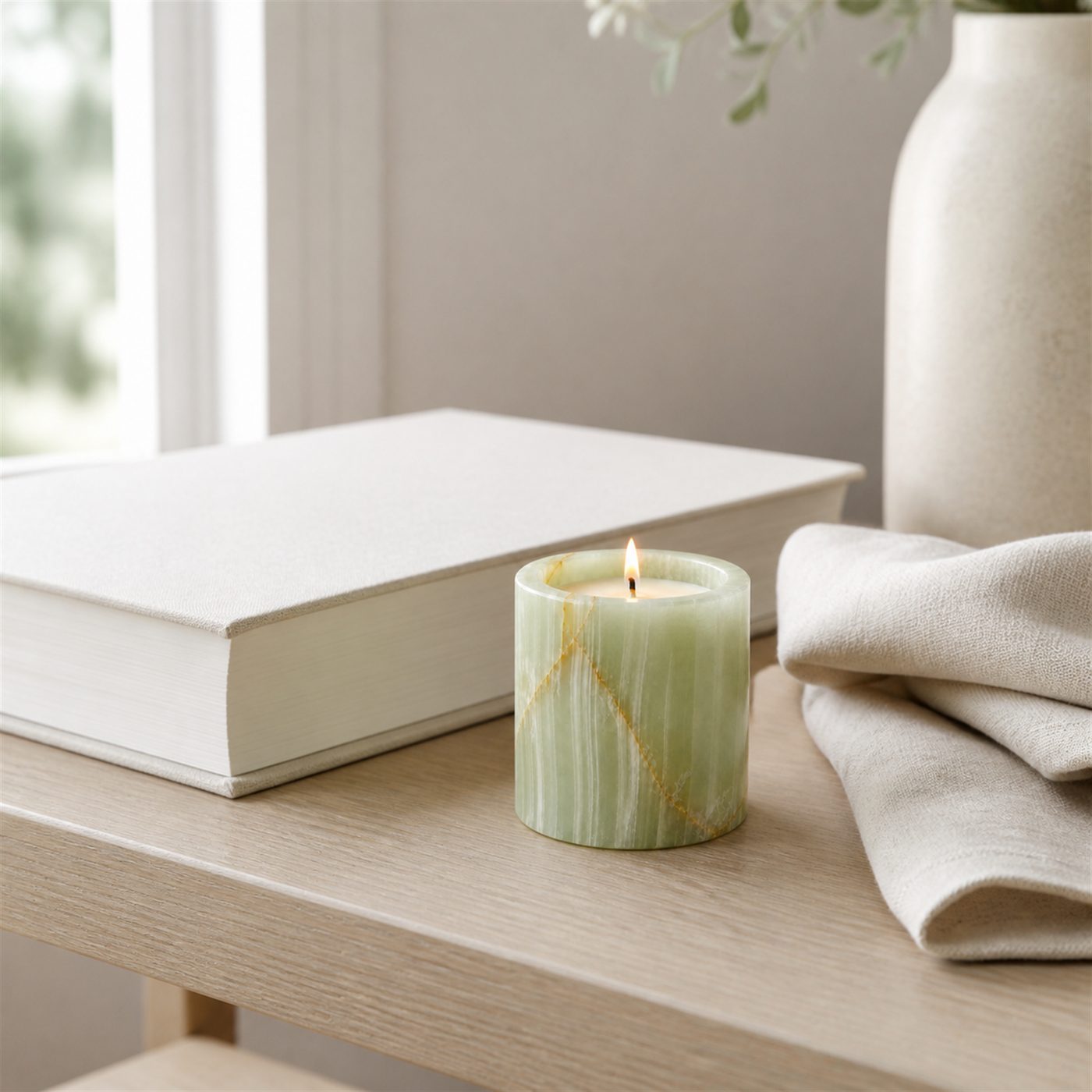
Natural stone vessels, like hand-carved onyx, represent the pinnacle of this approach. Onyx is quarried, shaped by hand, and built to age beautifully. Unlike glass, which scratches and cracks, or ceramic, which chips at the rim, hand-carved stone develops a patina and actually improves with age. When the candle is finished, you have a durable object for your shelf, desk, or bathroom, something worth keeping because it's genuinely beautiful.
This philosophy inverts the throwaway candle model. Instead of buying a new jar with each candle, you own a permanent vessel. You're not generating packaging waste every few months. You're investing in one object that lasts years or decades, which is the definition of sustainable design.
What to Look for on the Label
When shopping for a sustainable candle, look for these signals: 100% plant-based wax (ideally soy), a cotton or cotton-blend wick, IFRA-certified fragrance, and a vessel built from durable material. Transparency matters, brands should clearly state their wax source and wick composition. Vague language like "eco-friendly" or "natural" without specifics is a red flag.
Also consider how the candle was made. Small-batch production from ethical sources signals care. Hand-carved stone vessels, in particular, indicate that the brand values durability over disposability. If the brand story emphasizes keeping quality over volume, that's another sign you're buying from someone who understands sustainability as a philosophy, not a marketing angle.
Building Your Sustainable Candle Collection
Sustainable candles don't need to be a luxury indulgence. They're an investment in cleaner air, better design, and a slower approach to consumption. Once you light your first truly well-made candle, one with plant-based wax, a clean cotton wick, and a vessel you'll treasure, the difference becomes obvious. The flame is steadier. The scent is cleaner. There's no soot on the ceiling. And when the wax is gone, you still have something beautiful on your shelf.
If you're building a collection, consider exploring different stone vessels and fragrance profiles available in the Scintilla collection, each crafted with the same commitment to renewable wax, clean wicks, and hand-carved durability. The goal isn't to own dozens of candles, it's to own fewer, better candles that reflect how you want to live.
Key Takeaways
- Plant-based soy wax burns cleaner and longer than paraffin, with 90% less soot.
- Cotton wicks deliver steadier flames and better scent throw without synthetic residue.
- IFRA-certified fragrance ensures every ingredient has been independently vetted for safety.
- A hand-carved natural stone vessel is the heart of a sustainable candle, something you keep, not throw away.
Frequently Asked Questions
Is soy wax really more eco-friendly than paraffin?
Yes. Soy wax is plant-based and renewable, whereas paraffin is a petroleum byproduct. Soy burns 90% cleaner, produces less soot, and lasts longer, so you need fewer candles over time. From an air quality and resource perspective, the difference is measurable.
Why does cotton wick matter?
Cotton burns at a lower temperature and produces minimal soot, especially when paired with plant-based wax. Synthetic wicks often contain metal cores and burn hotter, releasing more particulates into your air. A clean-burning cotton wick is part of the entire sustainable equation.
What does IFRA-certified fragrance mean?
IFRA (International Fragrance Association) certification means a third party has tested every ingredient in the fragrance blend and confirmed it's safe for use at the concentration specified. It's a transparency and safety standard that goes beyond most home fragrance products.
What makes a stone vessel more sustainable than glass or ceramic?
A hand-carved stone vessel like onyx is built to age and improve with time. Unlike glass (scratches, cracks) or ceramic (chips at the rim), stone develops character. It's designed to be kept and used for years or decades, not thrown away once the candle is burned. That's true sustainability: one object, indefinite use.
Explore candles designed to last. Every Scintilla candle is poured in 100% soy wax, finished with a clean cotton wick, fragmented with IFRA-certified scent, and set in hand-carved natural stone.
View our collection